


Montessori Egg & Cup Puzzle
5.0 (41 reviews) Loved by 25,000+ parents
Age fit
Best for 6–15 months Check an age
Drag the little one to check any age — handy for gifts.
Buy 2, save 10% — code B2G10
Buy 3, save 15% — code B3G15
- BIS certified
- Non-toxic finishes
- Neurosurgeon-reviewed
- Free delivery over ₹500
- Free returns
- Cash on delivery
Often bought together

“I created this because placing an egg into a cup teaches babies patience and steady hands — skills they'll use every single day.”

What it builds
- Body Balance
- Crawling & Movement
- Grip Strength
About this toy
Helps your baby practice steady hands and simple problem-solving—like carefully placing a lid on a container without knocking it over.
🟢 For 6+ months babies
✅ Boosts problem-solving and fine motor skills
✅ Easy grip for effective learning
✅ Stable design for body balance improvement
✅ Encourages cognitive and physical development
Where it sits on the ladder
What comes before & after
Every toy is one step on a skill ladder. Ready for more? The next one picks up right where this one leaves off.
Stage 3 · 5–8 months
Complete sits & explores
Sitting up turns the whole room into a science lab.


Montessori Rolling Drum Rattle

Circle Shape Puzzle

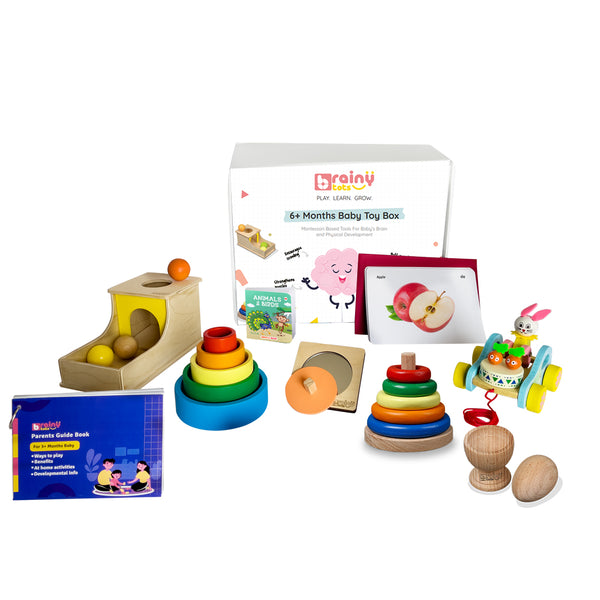
6-12 Months Baby Toy Box
The whole stage in one box — with a printed stage guide.
The details
Everything in the box


What’s in the box
- 1× Wooden Egg
- 1× Wooden Cup
Features

What it does for their brain
Fine Motor Skills, Gross Motor Skills, Problem Solving, Body Balance, Hand-Eye Coordination
Made with
Premium sustainable wood with baby-safe, non-toxic colors
Everything about this toy
Delivery & returns
Free delivery on orders above ₹500, in 3–5 working days across India. Not happy with it? Return it within 7 days of delivery — returns and replacements are free.
How to play
The BrainyTots way
Five small habits that turn a good toy into a great one. Printed on the stage card in every box, too.
-
Step 1: Stimulus
Offer the Montessori Egg & Cup Puzzle on its own. Put the other toys away for now.
-
Step 2: Interaction
Sit with them. Show it once, slowly — then let them try. Name what they do.
-
Step 3: Repetition
Bring it out every day for a week or two. Repeating is how it sticks.
-
Step 4: Progression
When it looks easy, make it harder — add a rule, a sound or a second step.
When it looks easy, the next step is {next}. -
Step 5: Rest
Put it away for a few days. It’ll feel brand new when it comes back.