

Wooden blocks for kids in India
A parent's guide to choosing safe, developmental wooden blocks and building toys — why wood matters, what to look for, and our tested picks for every age.
Why choose wooden blocks over plastic?
Wooden blocks have been the gold standard in early childhood play for decades — and the science backs it up. Here is what makes them worth it.
Natural sensory feedback
Wood has real weight, warmth, and texture. Children feel the heft of each piece, hear it click against another, and develop a grounded sense of cause and effect that lightweight plastic cannot replicate.
Builds spatial reasoning
Fitting wooden shapes into slots, stacking pieces into towers, and threading pegs into boards all exercise the same spatial-motor circuits your child will need for writing, maths, and everyday coordination.
Safe and long-lasting
Quality wooden blocks survive years of play without cracking, fading, or shedding microplastics. With BIS-safe, non-toxic finishes, they are among the safest toys you can hand to a baby or toddler.
Better for the planet
Wood is renewable, biodegradable, and recyclable. Choosing well-made wooden toys over disposable plastic ones means less waste and a smaller environmental footprint — something that matters for your child's future too.
How to choose wooden blocks in India
Not all wooden toys are equal. Here is what Indian parents should check before buying — whether online or in store.
Check for BIS certification
Indian safety standard IS 9873 covers toy safety. Look for BIS-marked products to ensure the wood, paint, and small-parts design meet national safety requirements.
Non-toxic finishes only
Babies mouth everything. Insist on food-grade or water-based paints. Avoid toys with strong chemical smells — that is usually a sign of solvent-based lacquer or cheap dyes.
Right size for the age
Blocks for babies (6–12 months) should be large enough to grip but impossible to swallow. For toddlers (1–3 years), smaller pegs and shaped pieces build precision without posing a choking risk.
One skill per toy
The best wooden blocks isolate a single challenge — fitting a shape, stacking a tower, threading a peg. This lets your child focus, succeed, and build real confidence rather than getting overwhelmed.
Our recommended wooden blocks and building toys
Every toy below is made from natural wood with non-toxic finishes. We chose them because they match real developmental milestones — not marketing hype.
 6–24 months
4 Shapes Wooden Puzzle - Montessori Shape Sorting Toy for Babies (6-24 Months)
Classic shape-fitting challenge — teaches shape recognition and hand-eye coordination with chunky wooden pieces sized for small hands.
 6–18 months
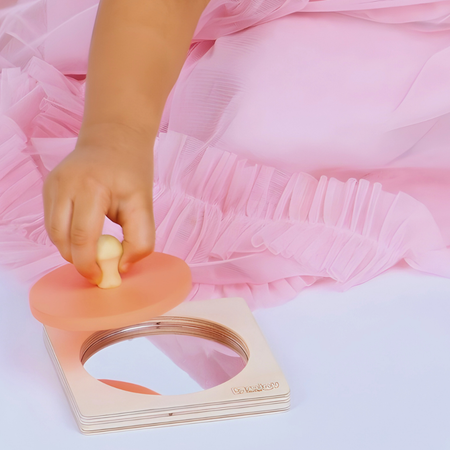
Circle Shape Puzzle – Grasping & First Problem-Solving Toy - Wooden Montessori Toy for Babies 6-18 Months
Introduces size graduation within a single shape — your child learns large vs small while practising the pincer grip.
 1–3 years
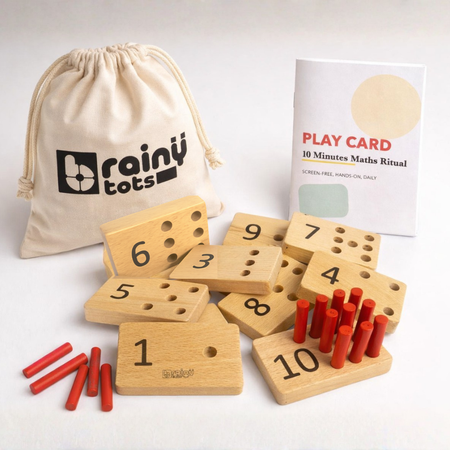
BrainyTots Montessori Counting Peg Board Toy for Kids 1–3 Years | Early Learning Math Activity Set with 10 Wooden Number Board and Pegs , Storage Pouch & Play Guide for Toddler Brain Development
Wooden pegs slot into numbered holes — combines stacking, counting, and colour matching in one compact board.
 6–18 months
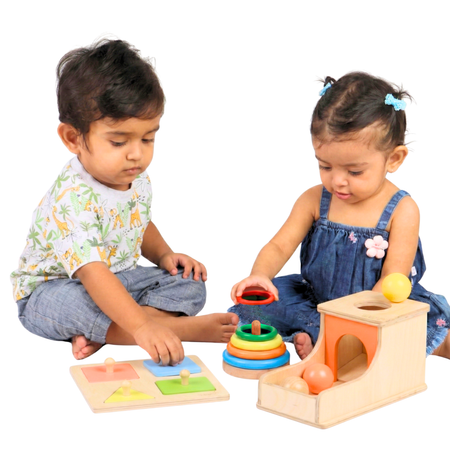
Montessori Problem Solving Kit For Babies - Montessori Wooden Toys Gift Set for 6-18 Months
A curated set of wooden challenges that grow with your baby — from simple fitting to multi-step sequencing.
 8–36 months
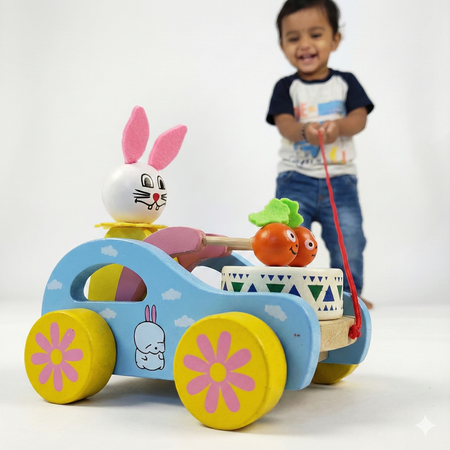
Pull Toy – First Walking & Follow-Along Toy for Babies & Toddlers | Montessori Walking Toy | 8-36 Months
A weighted wooden pull-along that rewards walking with satisfying movement — builds balance and forward planning.
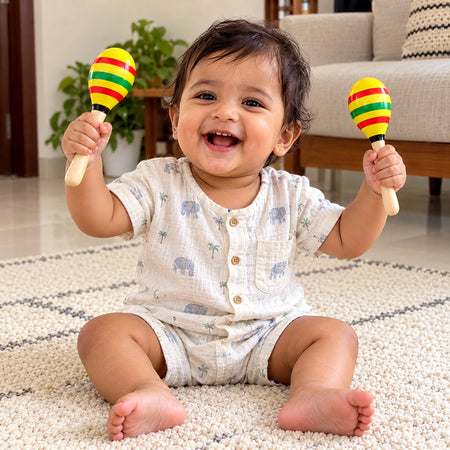 0–18 months
Montessori Egg Shakers – First Sound & Grasp Toy | Sensory Toy 0-18 Months
Smooth wooden shakers that introduce rhythm, grip strength, and cause-and-effect — shake it, hear it, learn it.
"A simple set of wooden blocks can teach your child more than a shelf of battery-powered gadgets. Wood forces the child to be the engine — to stack, to balance, to figure it out. That is where real learning lives."
Nikita Aakhade
Founder, BrainyTots · Harvard Early Childhood Development · Author, The Daily Parenting Toolkit