

Sensory Play for Babies (0–12 Months): Easy Home Ideas + What Toys Actually Help
Sensory Play for Babies (0-12 Months): Sparking Curiosity From Day One!
Hey fellow mamas! Remember that feeling of pure, unadulterated joy on your little one's face the first time they grabbed your hair (ouch!) or splashed in the bath? That's sensory play, and those little moments are HUGE for their development! As a mom of a busy 3-year-old, I've learned that sensory exploration isn't just fun – it's absolutely crucial for building those all-important brain connections. And the best part? You don't need to spend a fortune at toy stores! Let's dive into how to create simple, stimulating sensory experiences for your baby using things you probably already have at home. Think of it as tapping into our "mom-tuition" – that inner knowing that helps us guide our little ones.Why Sensory Play Matters More Than You Think
Okay, we all know babies love to touch, taste, and explore. But sensory play is so much more than just messy fun (although it *is* pretty fun to watch!). It helps babies: * **Develop their brains:** All those new sensations are building neural pathways that support learning, problem-solving, and creativity. * **Learn about the world:** They're discovering textures, temperatures, sounds, and smells, which helps them understand their environment. * **Boost their language skills:** Describing what they're feeling – "soft," "squishy," "loud" – builds their vocabulary. * **Improve their motor skills:** Grasping, reaching, and manipulating objects strengthens their muscles and coordination. * **Regulate their emotions:** Sensory input, especially calming textures and sounds, can help soothe and regulate their emotions.Easy Sensory Play Ideas (Using Stuff You Already Have!)
Forget complicated setups! Here are some simple, age-appropriate sensory activities you can create at home: * **0-3 Months: The Wonder of Sight and Sound** * **Black and White Mobiles:** Newborns’ vision is still developing, and they love high-contrast images. Hang a simple black and white mobile over their crib. Or even better, use our BrainyTots Flashcards! The high-contrast images are perfect for stimulating their vision. * **Gentle Sounds:** Introduce soft music, rattles, or even just gentle humming. Narrate what you are doing. "Mommy is giving you a bath." "The water is warm." * **Textured Blankets:** Let your little one explore different textures with soft blankets, plush toys, and even different clothes (velvet, cotton, silk). * **4-6 Months: Reaching and Grabbing** * **Sensory Basket:** Fill a basket with safe, household items like wooden spoons, metal bowls, fabric scraps, and baby-safe toys. Make sure everything is large enough that they can't choke on it! * **Tummy Time Treasure Hunt:** Place textured toys (like our BrainyTots Cloth Books – they're perfect for this!) around your baby during tummy time to encourage reaching and crawling. * **Water Play:** (Always supervised!) A shallow container of water with floating toys is a great way to explore temperature and cause-and-effect. * **7-12 Months: Exploring Textures and Sounds** * **Pasta Bin:** Cook and cool some pasta, then let your baby explore the slimy, slippery texture. You can even add a few drops of food coloring for extra visual appeal (just be prepared for a mess!). * **Crinkle Toys:** Those noisy crinkle toys are fantastic for auditory and tactile stimulation. Don't underestimate their power! * **Taste-Safe Painting:** Mix some yogurt with food coloring and let your baby "paint" on their highchair tray. It's edible, fun, and a great sensory experience!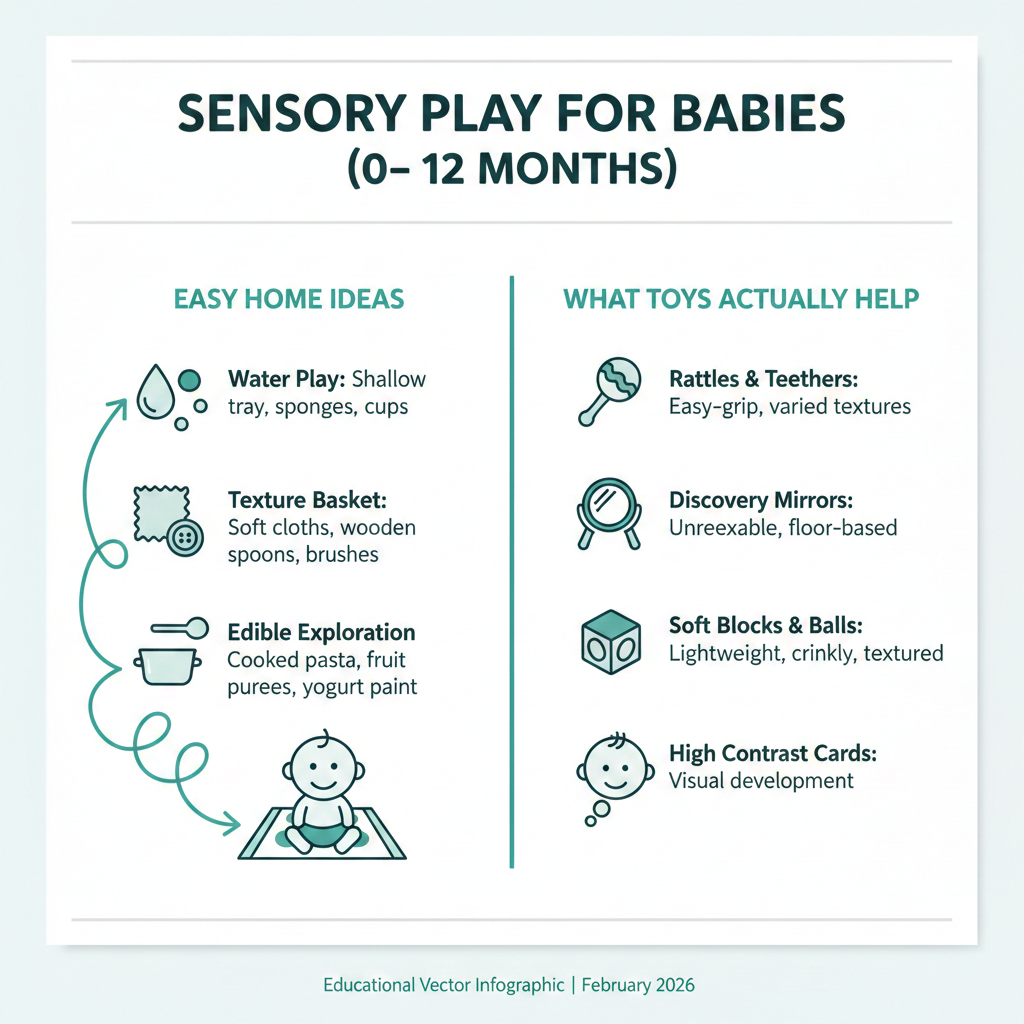
Toys That Actually Help (And Why!)
While you don't need to break the bank on fancy toys, some are genuinely helpful for supporting sensory development: * **Play Gym:** A good play gym (like the BrainyTots Play Gym!) is worth its weight in gold. Look for one with a variety of textures, colors, and dangling toys. * **Teethers:** Teethers aren't just for teething! They often have different textures and shapes that babies love to explore. * **Musical Instruments:** Simple shakers, rattles, and xylophones can introduce babies to different sounds and rhythms. * **Cloth Books:** As mentioned before, cloth books are great for tactile exploration and introducing colors and images. Here are some additional tips: * Always supervise your baby during sensory play. * Ensure that all materials are safe and non-toxic. * Don't be afraid of mess (embrace it!). * Let your baby lead the way – follow their curiosity! * Rotate toys and activities to keep things interesting. * Remember: it's about the EXPERIENCE, not the outcome.Sensory Play: A Gift That Keeps on Giving
Creating sensory-rich experiences for your baby is one of the best investments you can make in their development. It's a simple, fun, and incredibly effective way to nurture their curiosity, build their brains, and strengthen your bond. So, go ahead, mama – get messy, get silly, and watch your little one bloom! You've got this!Last updated: August 17, 2026