

Overstimulation in Babies: Signs, Calming Routines, and How to Use Toys the Right Way
Uh Oh, My Little One's Frazzled! Understanding Overstimulation in Babies (and Keeping Your Sanity!)
Okay, mamas (and papas!), raise your hand if you've ever been there: You're at a playdate, your little one is surrounded by toys, kids, and enough noise to make a rock concert blush…and then BAM! Meltdown city. Sound familiar? Yep, we've all been there. It's called overstimulation, and it's a very real thing, especially for our little BrainyTots. Honestly, sometimes *I* feel overstimulated after a day with my 3-year-old, Leo! But the difference is, I can usually (eventually!) regulate myself with a cup of tea and a quiet show. Our babies are still learning that crucial skill, which is why we need to be their guides.
What Exactly is Overstimulation? (And Why Does My Baby Hate Shopping Malls?)
Think of it this way: a baby's brain is like a tiny computer processing a *ton* of new information every single second. Sights, sounds, smells, textures... it's all flooding in! Overstimulation happens when the input is too much for that little brain to handle at once. It's not that they're being "naughty" or "difficult"—their brains are simply overloaded. Scientifically speaking, it's closely tied to the development of their nervous system. Their ability to regulate sensory input is still under construction, so to speak.
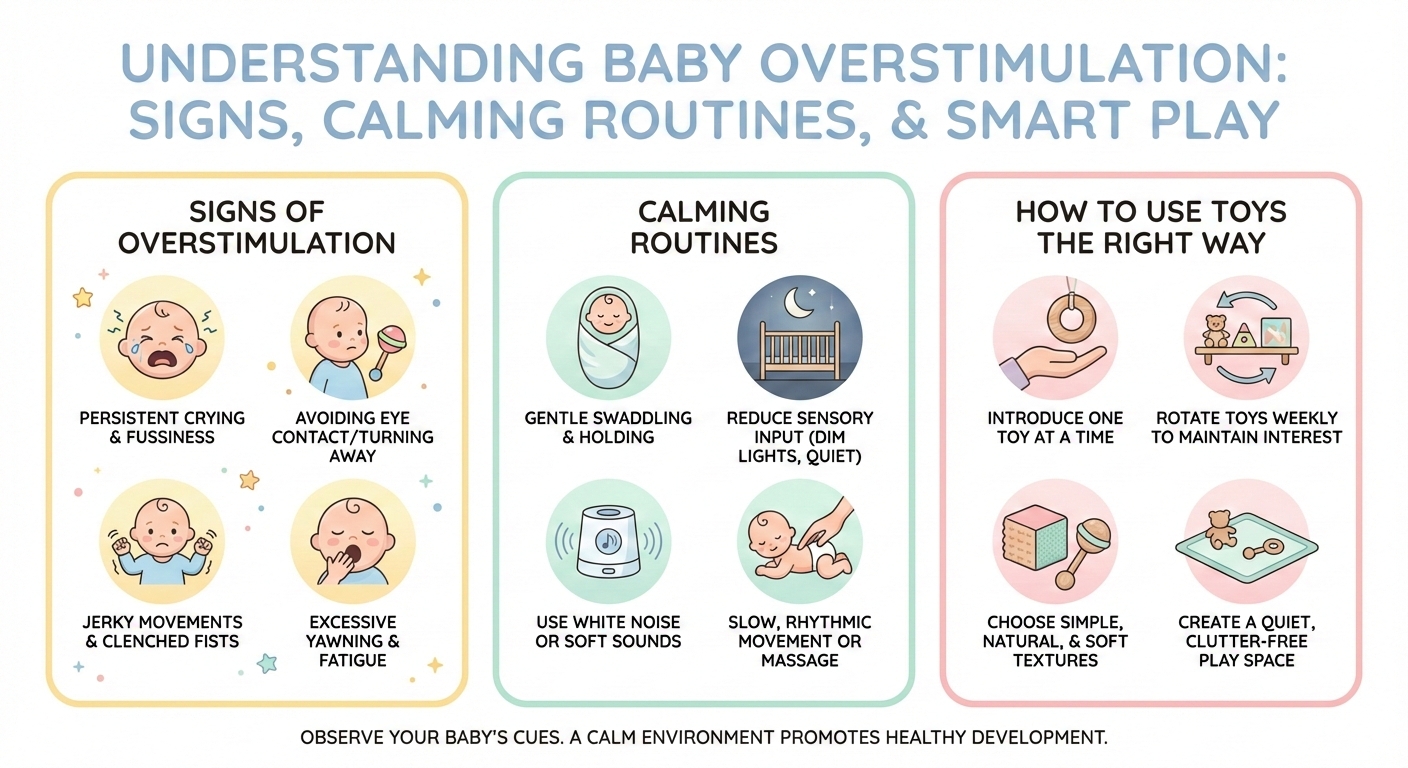
You might be seeing the signs of overstimulation and not even realize it. Here are a few clues to look out for:
- Fussiness and Irritability: This is often the earliest sign. Are they grumbling more than usual?
- Difficulty Sleeping: Suddenly resisting naps or bedtime? Trouble staying asleep? Overstimulation can be to blame.
- Arching Back: This can be a physical sign of discomfort and distress.
- Turning Away or Avoiding Eye Contact: They’re literally trying to shut things out.
- Clinginess: Suddenly extra attached to you? They're seeking comfort and security.
- Increased Crying: The universal baby signal of "I'm overwhelmed!"
Calming Routines and Activities: Reclaiming Your (and Your Baby's) Zen
Okay, so what can we *do* about it? Here's the good news: there are lots of ways to help your little one stay calm and regulated. The key is to be proactive and learn their individual signs of being overwhelmed.
- Create a Calm-Down Toolkit: Think of this as your emergency stash of serenity. For us, it includes a soft blanket, a favorite book, and sometimes a quiet song.
- Limit Screen Time (Yes, Even Videos of Cute Animals!): Screens, even baby-friendly ones, are often visually overstimulating. Save them for when you *really* need them, and limit the duration.
- Embrace Sensory Play... Strategically: Sensory play is fantastic for development, but quantity matters! Choose one or two simple activities at a time. For example, instead of offering a bin full of different textured toys, try focusing on a single container of water with some floating toys. Leo adores our BrainyTots Sensory Blocks because the shapes allow him to build and explore textures AND they don’t overwhelm him with loud sounds and bright colors.
- Establish a Consistent Bedtime Routine: Predictability is key for calming the nervous system. Bath, story, song – whatever works for you, stick to it!
- The Power of Nature: Sometimes, just getting outside to a green space can do wonders. The gentle sights and sounds of nature are often incredibly soothing. Even a walk in the park can be a refreshing (and free!) reset button.
- Dim the Lights and Reduce Noise: A quiet, dimly lit room can be a sanctuary when your little one is feeling overwhelmed.
- Babywearing: Sometimes just being held close can provide the security and comfort your baby needs to regulate. The gentle rocking motion is an added bonus!
- Focus on One-on-One Play: Sometimes less is more. Turn off the TV, put away your phone, and dedicate some focused attention to your baby. This allows them to explore at their own pace without feeling overwhelmed by external stimuli.
Toys: Less Can Truly Be More
Speaking of toys, it's easy to fall into the trap of thinking more toys = more fun and development. But often, it's the opposite! Consider a toy rotation system. Put away most of your baby's toys and introduce a few new/old favorites each week. This keeps things fresh and prevents them from being overwhelmed by choice.
When choosing toys, think about simplicity and versatility. Toys that encourage open-ended play, like blocks or simple puzzles, are often better for development and less likely to cause overstimulation than toys with a lot of flashing lights and sounds. Our BrainyTots Stacking Cups are a perfect example! They're simple, engaging, and can be used for stacking, nesting, pouring, and so much more. They help develop fine motor skills and spatial reasoning without overwhelming the senses.
Remember, mama – you're doing great! Every baby is different, so it might take some experimenting to find what works best for yours. Pay attention to their cues, trust your instincts, and don't be afraid to ask for help. And above all, remember to take care of yourself. A calm mama is the best thing for a calm baby!
Last updated: August 17, 2026